
Proper peptide storage and handling guide are essential factors when working with peptide products. Peptides are complex biological molecules that require appropriate environmental conditions to help maintain their structural integrity and quality.
Whether you are a researcher, laboratory professional, or customer purchasing peptide products for research purposes, understanding correct storage practices helps protect your materials from unnecessary exposure to factors that may affect stability.
At Apex Biotech Labs, we provide detailed product information and storage recommendations to help customers properly manage their peptide products from delivery through laboratory use.
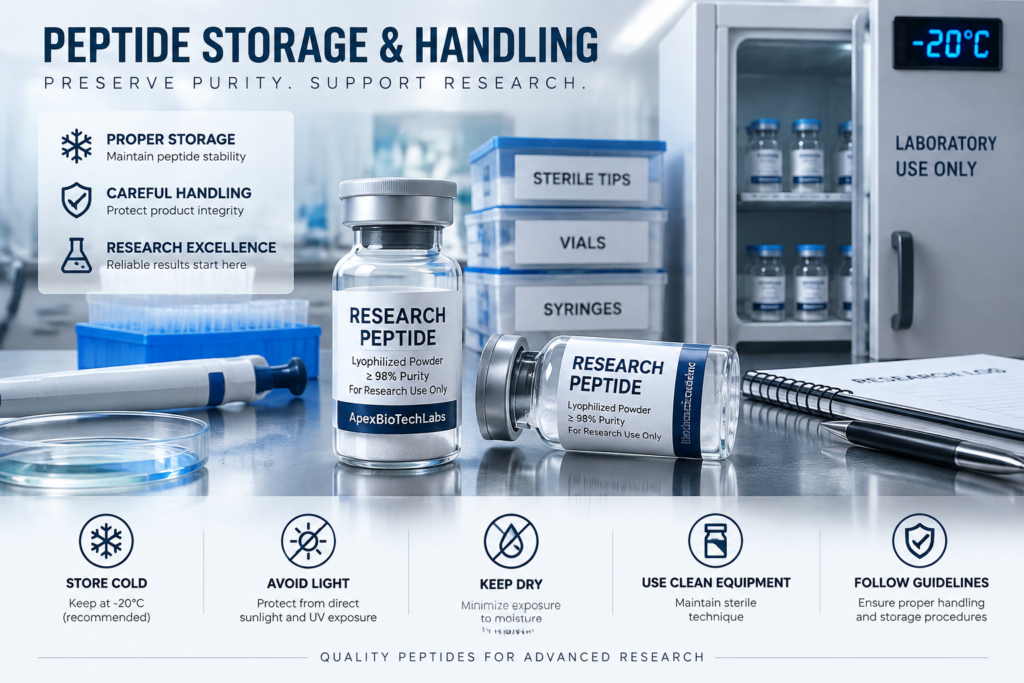
Why Proper Peptide Storage and Handling Matters
Peptides can be sensitive to environmental conditions such as temperature changes, moisture, light exposure, and improper handling.
Maintaining suitable storage conditions helps reduce unnecessary degradation and supports the reliability of peptide materials during research applications.
Several factors may influence peptide stability:
- Temperature fluctuations
- Exposure to humidity
- Repeated opening of containers
- Direct light exposure
- Improper handling procedures
Following recommended storage practices helps preserve the quality of peptide products throughout their intended storage period.
How Should Peptides Be Stored?
The appropriate storage method depends on the specific peptide product, formulation, packaging, and manufacturer recommendations.
For many lyophilized peptide products, researchers commonly follow these general storage principles:
Keep Peptides in Their Original Container
Peptides should remain sealed in their original packaging whenever possible.
The original container is designed to protect the product from unnecessary exposure to external conditions.
Protect Peptides From Moisture
Moisture exposure can affect the stability of many peptide materials.
For this reason:
- Keep containers tightly closed
- Avoid unnecessary opening
- Store products in dry conditions
- Handle containers with clean equipment
Minimize Temperature Changes
Frequent temperature fluctuations may negatively affect product stability.
Recommended practices include:
- Avoid repeated warming and cooling cycles
- Return products to appropriate storage after handling
- Follow product-specific storage instructions
Lyophilized Peptide Storage Guidelines
Many peptide products are supplied in a lyophilized (freeze-dried) format.
Lyophilization helps improve storage stability by removing moisture from the product.
General handling recommendations include:
Before opening:
- Inspect packaging condition
- Confirm product information
- Prepare a clean working environment
After opening:
- Minimize exposure time
- Keep containers properly sealed
- Follow the recommended storage instructions provided for that product
For specific peptide recommendations, always refer to the individual product documentation.
Factors That Affect Peptide Stability
Temperature
Temperature is one of the most important factors affecting peptide stability.
Excessive heat exposure or repeated temperature changes may influence peptide structure over time.
Moisture
Humidity can affect freeze-dried peptide products.
Keeping peptides protected from moisture helps maintain their intended condition.
Light Exposure
Some peptide materials may be sensitive to prolonged light exposure.
Store products away from unnecessary direct light when recommended.
Handling Practices
Proper handling reduces unnecessary risks.
Good practices include:
- Using clean working areas
- Avoiding contamination
- Limiting unnecessary product exposure
- Following product-specific instructions
Peptide Shipping and Receiving Guidelines
Proper handling begins when your peptide package arrives.
After receiving your order:
- Inspect the package condition.
- Confirm the product information.
- Review the included storage instructions.
- Store the product according to the recommended conditions.
Shipping conditions can vary depending on product type, destination, and packaging requirements.
Learn more about our delivery process:
Maintaining Peptide Product Quality
Product quality depends on several factors, including:
- Proper storage
- Correct handling procedures
- Suitable packaging
- Following recommended guidelines
At Apex Biotech Labs, we focus on providing clear product information to support responsible research use.
Explore our research peptides
Conclusion
Proper peptide storage and handling play an important role in maintaining product quality and stability. By following recommended practices, protecting products from unnecessary environmental exposure, and reviewing specific product instructions, researchers can better manage their peptide materials.
For detailed information about individual products, visit our peptide product pages or contact our support team for additional guidance.
Frequently Asked Questions
How should peptides be stored?
Peptides should be stored according to the specific product instructions provided by the manufacturer. Storage requirements may vary depending on peptide composition and formulation.
What affects peptide stability?
Factors such as temperature, moisture, light exposure, and handling practices may influence peptide stability.
Why is moisture protection important for peptides?
Moisture can affect many lyophilized peptide products. Proper sealing and dry storage conditions help protect product integrity.
How should peptides be handled after delivery?
Customers should inspect packaging, review product information, and follow the recommended storage instructions after receiving their order.
Can peptide storage requirements vary?
Yes. Different peptide products may have different recommended storage conditions depending on their characteristics and formulation.