
Understanding Dosage, Administration and Safety
A scientific guide to peptide dosage, pharmacokinetics, administration methods, clinical evidence and important safety considerations to know what peptides are.
Peptide dosing is an important subject in modern pharmacology, biotechnology and pharmaceutical research. As peptide based medicines continue to develop, understanding how their dosages are determined has become increasingly relevant to healthcare professionals, researchers, biotechnology students and individuals interested in peptide science.
However, peptide dosing is not a universal process. Different peptides have different molecular properties, biological targets, pharmacokinetic characteristics, formulations and clinical applications. Consequently, a dosage appropriate for one peptide cannot automatically be applied to another.
For approved peptide medicines, dosing recommendations are established through scientific investigation, clinical trials, regulatory evaluation and product-specific prescribing information. For experimental peptides, the available evidence may be limited to laboratory investigations, animal studies or early-stage human research.
Understanding these distinctions is essential when evaluating peptide dosage information.
This guide explains how peptide dosing is determined, which scientific factors influence dosage, how administration routes differ, and why safety and clinical evidence must remain central to peptide research.
1. What Is Peptide Dosing?
Peptide dosing refers to the amount of a specific peptide administered over a defined period, according to an established clinical or research protocol.
In pharmacology, a dosing regimen generally describes several related elements:
- Dose: The amount of active substance administered on a particular occasion.
- Dosage frequency: How often the substance is administered.
- Route of administration: How the substance enters the body.
- Duration: The length of the treatment or experimental period.
- Dose adjustment: Changes made according to clinical response, tolerability, or other relevant considerations.
These elements are considered together because the same amount of a substance may produce different effects depending on how it is administered and how frequently it is given.
For example, an oral formulation and an injectable formulation of a peptide may have different absorption characteristics and dosing requirements.
Similarly, two different peptides may have very different biological half-lives, receptor interactions and pharmacological properties.
This explains why there is no universal peptide dosage applicable to all compounds.
2. How Are Peptide Dosages Determined?
The determination of peptide dosage involves a combination of laboratory research, pharmacological investigation, clinical trials and regulatory evaluation.
For approved medicines, the final recommended dosage is established using evidence about the benefits and risks of the specific product for its approved indication.
Several scientific considerations contribute to this process.
2.1 Pharmacokinetics
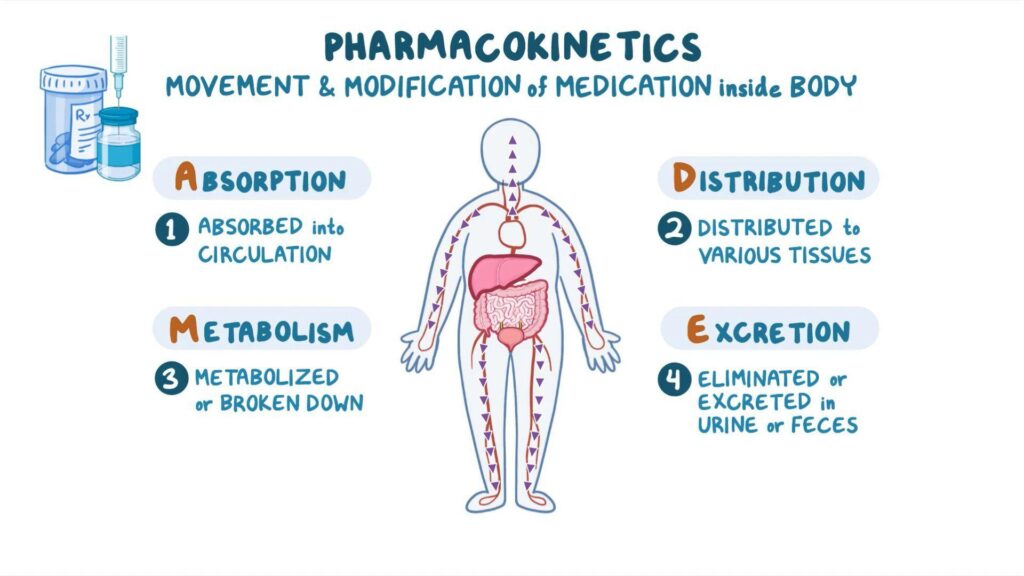
Pharmacokinetics describes how the body processes a substance over time.
It is commonly explained through four interconnected processes:
Absorption: How a substance enters the bloodstream or reaches its site of action.
Distribution: How the substance moves through the bloodstream and body tissues.
Metabolism: How the substance is chemically transformed through biological processes.
Excretion: How the substance or its metabolites are eliminated from the body.
These processes influence the concentration of a peptide in the body over time.
For example, some peptides are rapidly degraded by enzymes, while others have been chemically modified or formulated to improve their stability and duration of action.
Pharmacokinetic investigations help scientists understand how these differences influence exposure and dosing requirements.
2.2 Pharmacodynamics
Pharmacodynamics examines what a substance does to the body.
For peptide medicines, this may involve studying:
- Receptor binding.
- Receptor activation.
- Biological signaling pathways.
- Changes in physiological activity.
- The relationship between drug exposure and response.
A peptide may interact with a specific receptor, but the strength and duration of its biological effect depend on several factors.
Researchers therefore investigate both the concentration of a substance and the resulting biological response.
2.3 Biological Half-Life
Half-life is the time required for the concentration of a substance in the body or a relevant biological compartment to decrease by approximately 50% during a defined elimination phase.
It is an important pharmacokinetic concept because it helps researchers understand how long a substance remains in the body.
Peptides may have substantially different half-lives depending on their molecular structures, susceptibility to enzymatic degradation, distribution and elimination.
Some peptide medicines are designed or formulated to provide prolonged activity, while others have shorter pharmacological durations.
Importantly, half-life does not automatically determine the dosing interval. Clinical response, receptor activity, formulation characteristics and evidence from clinical trials also influence the final regimen.
2.4 Clinical Evidence
For approved peptide medicines, clinical trials help establish the relationship between dosage, effectiveness and safety.
Researchers investigate different dose levels and evaluate outcomes such as:
- Clinical effectiveness.
- Adverse reactions.
- Tolerability.
- Pharmacokinetic exposure.
- Pharmacodynamic responses.
- Differences between patient populations.
The results contribute to the prescribing information reviewed by regulatory authorities.
A dosage used in an experimental laboratory study should not be interpreted as an established human therapeutic dosage.
3. Understanding Peptide Dosage Measurements
Understanding measurement units is essential when reading peptide-related scientific literature and pharmaceutical information.
Several different units may appear in peptide research and prescribing information.
3.1 Milligrams (mg)
A milligram is one-thousandth of a gram.
It is commonly used to describe the mass of an active pharmaceutical ingredient or the amount of a medicine in a prescribed dose.
3.2 Micrograms (mcg or µg)
A microgram is one-millionth of a gram.
One milligram is equivalent to 1,000 micrograms.
Some peptide medicines are described using microgram measurements because of their specific formulation and pharmacological characteristics.
3.3 Millilitres (mL)
A millilitre is a unit of volume.
It describes the volume of a liquid formulation rather than the mass of the active peptide contained within it.
This distinction is particularly important when reading pharmaceutical labels.
3.4 Concentration
Concentration describes the amount of a substance present within a defined volume.
For example, a pharmaceutical label may express concentration in milligrams per millilitre (mg/mL).
Concentration is not the same as the administered dose. A liquid’s volume alone does not establish how much active ingredient it contains.
3.5 Why Measurement Accuracy Matters
Confusing mass, volume and concentration can lead to serious medication errors.
The strength of a product, the concentration of its formulation and the prescribed dose must be interpreted separately.
Patients should follow the instructions provided for their exact approved medicine and presentation rather than relying on generic online conversion charts.

4. Factors That Influence Peptide Dosage
Peptide dosing is influenced by several molecular, pharmaceutical and clinical characteristics.
Molecular Structure
The amino acid sequence, chemical modifications and overall molecular structure can influence peptide stability, receptor interactions and biological activity.
Even relatively small structural differences may alter the pharmacological characteristics of related compounds.
Molecular Stability
Peptides can be susceptible to degradation by proteases and other enzymes.
Chemical modifications and pharmaceutical formulation techniques may influence stability and the duration of exposure.
Absorption and Bioavailability
Bioavailability describes the proportion of an administered substance that reaches systemic circulation in an available form.
It depends partly on the route of administration and the formulation.
Some peptides are poorly absorbed when taken orally because of enzymatic degradation and limited permeability across the gastrointestinal tract.
Other peptides have been specifically developed with oral formulations and technologies designed to improve absorption.
Route of Administration
The route of administration affects how a peptide enters the body and becomes available to its biological targets.
An oral product, subcutaneous injection and intravenous formulation cannot be assumed to have equivalent dosing requirements.
Clinical Indication
The condition being treated is an important consideration in determining the appropriate dosage.
A peptide medicine may have different approved dosing recommendations depending on the indication, product formulation and patient population.
Individual Patient Characteristics
Healthcare professionals may consider factors such as:
- Age.
- Body weight, where relevant to the product.
- Kidney function.
- Liver function.
- Other medical conditions.
- Concurrent medications.
- Previous treatment history.
- Tolerability and treatment response.
These considerations are evaluated according to the specific medicine and its prescribing information.
5. Different Routes of Peptide Administration
Peptides can be formulated for different routes of administration. The appropriate route depends on the individual molecule, its formulation and its approved or investigational application.
5.1 Subcutaneous Administration
Subcutaneous administration involves delivering a medicine into the tissue beneath the skin.
Several approved peptide medicines are formulated for this route.
Absorption occurs from the subcutaneous tissue into the circulation, and the rate may vary according to the formulation and molecular characteristics of the medicine.
5.2 Intravenous Administration
Intravenous administration delivers a medicine directly into the bloodstream.
It is used for certain pharmaceutical products in clinical settings where the formulation and treatment requirements support this route.
Intravenous administration can produce different exposure patterns compared with other routes.
5.3 Intramuscular Administration
Intramuscular administration involves delivering a medicine into muscle tissue.
Some peptide-containing pharmaceutical formulations may use this route, depending on the product-specific authorization and formulation.
It should not be assumed that a peptide formulated for one route can safely be administered through another.
5.4 Oral Administration
Oral administration involves taking a medicine through the gastrointestinal tract.
Many peptides face challenges when administered orally because digestive enzymes can degrade them and their molecular characteristics may limit absorption.
Nevertheless, pharmaceutical research has developed specialized formulations designed to improve oral delivery for selected peptide medicines.
The existence of an approved oral peptide formulation does not mean that other peptides can be taken orally with equivalent effectiveness.
5.5 Other Delivery Technologies
Researchers are also investigating alternative peptide delivery systems, including specialized formulations and controlled-release technologies.
These approaches aim to address challenges involving stability, absorption, tissue distribution and duration of exposure.
The success of any delivery system depends on the specific peptide and the scientific evidence supporting the formulation.
6. Approved Peptide Medicines and Their Dosing Principles
One of the most important distinctions in peptide dosing is the difference between medicines that have received regulatory approval and compounds that remain under investigation.
Approved peptide medicines have undergone regulatory evaluation for specific indications and formulations.
Their prescribing information describes the recommended dosage, administration route, dose escalation where applicable, contraindications, warnings and other important instructions.
Semaglutide
Semaglutide is a GLP-1 receptor agonist used in several approved pharmaceutical products.
Depending on the product and indication, semaglutide may be available as an injectable or oral formulation.
For example, the current United States prescribing information for injectable Wegovy describes a starting regimen of 0.25 mg administered subcutaneously once weekly for four weeks, followed by a product-specific dose-escalation schedule.
The maintenance dosage depends on the approved indication and applicable prescribing information.
The oral formulation has a different administration schedule and must not be confused with the injectable formulation.
This example demonstrates why the formulation and approved indication must always be identified before discussing dosage.
Tirzepatide
Tirzepatide is a dual GIP and GLP-1 receptor agonist.
In the United States, Mounjaro is approved for improving glycemic control in type 2 diabetes, while Zepbound has separate approved indications.
The Mounjaro prescribing information describes a starting dosage of 2.5 mg administered subcutaneously once weekly, followed by a product-specific escalation schedule.
Dose adjustments and maintenance recommendations depend on the indication, clinical response and tolerability.
These examples are provided to illustrate how official prescribing information is structured. They are not individualized treatment recommendations.
Readers should consult the current prescribing information for the exact product and jurisdiction, because indications, formulations and dosage recommendations may change.
7. Experimental Peptides: What Is Known About Their Dosing?
Experimental peptides require a different approach to dosage discussions.
Some compounds have been investigated in laboratory experiments, animal models or early-stage clinical research. However, evidence from these settings does not automatically establish a safe or effective human dosage.
Examples frequently discussed in peptide research include:
BPC-157: Investigated in preclinical research involving biological processes such as tissue repair. Human safety and efficacy evidence remains insufficient to establish a routine therapeutic dosing regimen.
CJC-1295: Investigated for its effects on growth hormone-related pathways. Available clinical evidence is limited, and the FDA has identified safety concerns associated with certain compounded preparations.
TB-500: Associated with research involving thymosin beta-4-related biology. The FDA has identified important gaps in human exposure and safety information concerning compounded products containing the TB-500 fragment.
AOD-9604: Investigated as a modified peptide fragment related to growth hormone. Available safety evidence and the regulatory status of products containing this substance require careful consideration.
For these compounds, online dosage charts and community protocols should not be interpreted as scientifically established human dosing recommendations.
The FDA has specifically identified concerns involving peptide-related impurities, immunogenicity, characterization and limited safety information for several substances nominated for compounding.
The absence of an established therapeutic dose is not proof that a compound is safe at a particular amount.
Experimental research findings should be presented in their correct context, including the species studied, study design, route of administration and limitations of the available evidence.
8. Why Dose Escalation Is Used for Certain Peptide Medicines
Dose escalation refers to a planned increase in dosage over a defined period according to a medicine’s prescribing information or clinical research protocol.
It is used for certain medicines when gradual increases help evaluate tolerability and manage adverse reactions.
For some GLP-1-based medicines, gastrointestinal adverse reactions are important considerations during treatment initiation and dose escalation.
Clinical studies investigate how different dosing schedules influence tolerability, exposure and treatment outcomes.
However, dose escalation is not a universal characteristic of peptide medicines.
Some products have fixed dosing regimens, while others require specific adjustments according to the clinical indication and individual response.
The appropriate schedule must always be determined by the product-specific prescribing information or an approved research protocol.
9. Peptide Safety and Potential Risks
Safety is an essential part of any discussion about peptide dosing.
The risks associated with a peptide depend on its molecular properties, formulation, route of administration, purity, clinical evidence and individual patient characteristics.
Adverse Reactions
Approved peptide medicines can produce adverse reactions.
Depending on the medicine, these may include gastrointestinal symptoms, hypersensitivity reactions, metabolic effects or other product-specific complications.
For example, current prescribing information for semaglutide and tirzepatide describes gastrointestinal adverse reactions and other important warnings.
The nature and frequency of adverse reactions differ between medicines and should be evaluated using their official safety information.
Immunogenicity
Immunogenicity refers to the ability of a substance to trigger an immune response.
Some peptide products may cause the development of antibodies against the administered molecule.
This can potentially influence safety, effectiveness and other pharmacological characteristics.
Product Purity and Quality
The identity, purity and quality of a peptide product are important considerations.
Potential concerns include:
- Incorrect peptide identity.
- Inaccurate active ingredient content.
- Peptide-related impurities.
- Aggregation.
- Contamination.
- Inadequate manufacturing controls.
Analytical techniques such as high-performance liquid chromatography and mass spectrometry can help characterize peptide materials, but a laboratory result alone does not establish clinical safety or regulatory approval.
Drug Interactions
Peptide medicines may interact with other medicines or influence physiological processes affected by concurrent treatments.
For example, certain glucose-lowering medicines may increase the risk of hypoglycemia when used together.
Product-specific prescribing information should be consulted for relevant interactions and precautions.
Risks Associated With Unapproved Products
Products marketed as research peptides should not automatically be considered suitable for human administration.
A product being advertised online or accompanied by a certificate of analysis does not establish that it has undergone the clinical and regulatory evaluation required for an approved medicine.
10. How Do Scientists Evaluate Peptide Dosing in Research?
Peptide dosing research involves several experimental and clinical methods.

Preclinical Studies
Preclinical investigations examine the biological properties of a candidate compound before or alongside its evaluation in human clinical development.
These studies may use cell-based systems, isolated tissues or animal models.
They can provide information about biological activity, toxicity, pharmacokinetics and potential mechanisms of action.
However, findings from animal studies cannot automatically be translated into human dosing recommendations.
Phase I Clinical Trials
Phase I studies generally investigate initial human safety, tolerability and pharmacokinetic characteristics.
Depending on the product and development program, researchers may evaluate different dose levels and exposure patterns.
Phase II Clinical Trials
Phase II studies investigate preliminary effectiveness and continue evaluating safety.
They may examine different dosing regimens to identify an appropriate balance between treatment response and tolerability.
Phase III Clinical Trials
Phase III trials generally involve larger participant populations and assess the safety and effectiveness of a candidate medicine in defined patient groups.
Results contribute to regulatory submissions and decisions about approval.
Post-Marketing Surveillance
After a medicine is approved, safety monitoring continues.
Post-marketing surveillance can identify adverse reactions and safety issues that may not have been fully characterized during clinical trials.
Together, these stages demonstrate why responsible peptide dosing recommendations require substantially more evidence than a simple laboratory experiment.
11. Why There Is No Universal Peptide Dosing Chart
One of the most common misunderstandings in peptide discussions is the belief that all peptides can be classified into a single dosage chart.
This is scientifically inaccurate.
Peptides differ in:
- Molecular size and structure.
- Biological targets.
- Receptor affinity and activity.
- Enzymatic stability.
- Pharmacokinetic properties.
- Formulation.
- Bioavailability.
- Clinical indications.
- Available safety and efficacy evidence.
Consequently, dosage recommendations must be specific to the individual medicine or investigational compound.
A dosage established for one peptide cannot be assumed to be appropriate for another, even when both molecules are structurally related or influence similar biological pathways.
12. The Future of Peptide Dosing and Pharmaceutical Research
Advances in biotechnology and pharmaceutical science are improving how researchers investigate peptide dosing.
Several areas are receiving increasing attention.
Advanced pharmacokinetic modeling: Mathematical and computational approaches help researchers investigate drug exposure and dosing relationships.
Population pharmacokinetics: These methods examine how pharmacokinetic characteristics vary across groups of individuals.
Controlled-release formulations: Researchers are investigating delivery technologies designed to influence the release and duration of peptide exposure.
Computational drug development: Artificial intelligence and molecular modeling are being explored to support peptide design and drug discovery.
Precision medicine: Research into individual biological differences may help improve understanding of treatment response and tolerability.
Improved analytical characterization: Advanced analytical methods are helping researchers investigate peptide identity, purity, stability and formulation quality.
These developments may contribute to more accurate and evidence-based peptide development in the future.
Frequently Asked Questions About Peptide Dosing
Is there a standard dosage for all peptides?
No. Different peptides have different molecular structures, pharmacological properties, formulations and clinical applications. Dosing must be specific to the individual product and its supporting evidence.
How do scientists determine the correct peptide dosage?
Researchers evaluate pharmacokinetics, pharmacodynamics, clinical effectiveness, safety, tolerability and the intended therapeutic indication. For approved medicines, these findings contribute to official prescribing recommendations.
What is the difference between mg and mcg?
A milligram is one-thousandth of a gram, while a microgram is one-millionth of a gram. One milligram equals 1,000 micrograms.
Is mg the same as mL?
No. Milligrams measure mass, while millilitres measure volume. The concentration of a solution is needed to relate the amount of active substance to its volume.
Why do some peptide medicines have different dosing schedules?
Differences in molecular structure, absorption, metabolism, biological half-life, formulation and clinical indication can influence the recommended dosing schedule.
Are experimental peptide doses established?
Not necessarily. Some experimental compounds have limited human evidence or have only been studied in laboratory and animal settings. Their experimental protocols should not be interpreted as established therapeutic recommendations.
Why do some approved peptide medicines use dose escalation?
For certain medicines, gradual dosage increases are included in the prescribing information to help manage tolerability and adverse reactions. This approach is product-specific and is not required for every peptide medicine.
Can oral and injectable peptide doses be considered equivalent?
No. Different administration routes can produce different absorption and bioavailability characteristics. Product-specific formulations and prescribing instructions must be followed.
Does a peptide with a longer half-life always require less frequent administration?
Not necessarily. Half-life is one consideration, but receptor activity, formulation, clinical response and other pharmacological properties also influence the dosing interval.
Are research peptides safe for human use?
The term research peptide does not establish that a substance is safe, approved or suitable for human administration. Safety depends on the individual compound, available evidence, product quality and regulatory status.
Conclusion
Scientific References
- U.S. Food and Drug Administration. (2023). Clinical Pharmacology Considerations for Peptide Drug Products: Guidance for Industry. https://www.fda.gov/media/171901/download
- U.S. National Library of Medicine. WEGOVY (semaglutide) Prescribing Information. DailyMed. https://dailymed.nlm.nih.gov/dailymed/drugInfo.cfm?setid=ee06186f-2aa3-4990-a760-757579d8f77b
- U.S. National Library of Medicine. MOUNJARO (tirzepatide) Prescribing Information. DailyMed. https://dailymed.nlm.nih.gov/dailymed/drugInfo.cfm?setid=f4edc99a-ecdb-4a68-bcb4-69fbba2190e8
- U.S. Food and Drug Administration. Certain Bulk Drug Substances for Use in Compounding that May Present Significant Safety Risks. https://www.fda.gov/drugs/human-drug-compounding/certain-bulk-drug-substances-use-compounding-may-present-significant-safety-risks
- U.S. Food and Drug Administration. FDA’s Concerns with Unapproved GLP-1 Drugs Used for Weight Loss. https://www.fda.gov/drugs/drug-alerts-and-statements/fdas-concerns-unapproved-glp-1-drugs-used-weight-loss
- Naik, R., et al. (2025). Review of Clinical Pharmacology Information for Peptides Found in US FDA Drug Labeling. The Journal of Clinical Pharmacology, 65(11), 1370–1380. https://doi.org/10.1002/jcph.70047
- U.S. Food and Drug Administration. Drug Development and Approval Process. https://www.fda.gov/drugs/development-approval-process-drugs
Educational and medical disclaimer: This article is provided for general scientific and educational purposes. It is not medical advice, a prescribing guide, or a recommendation to initiate, modify or discontinue any medication. Dosing of approved medicines should follow current product-specific prescribing information and the instructions of a qualified healthcare professional. Experimental peptides should not be treated as established medicines or assumed safe for human administration.