
The field of peptide biotechnology continues to evolve, with scientific researchers exploring increasingly sophisticated ways to understand hormonal signaling, metabolic regulation and biological processes.
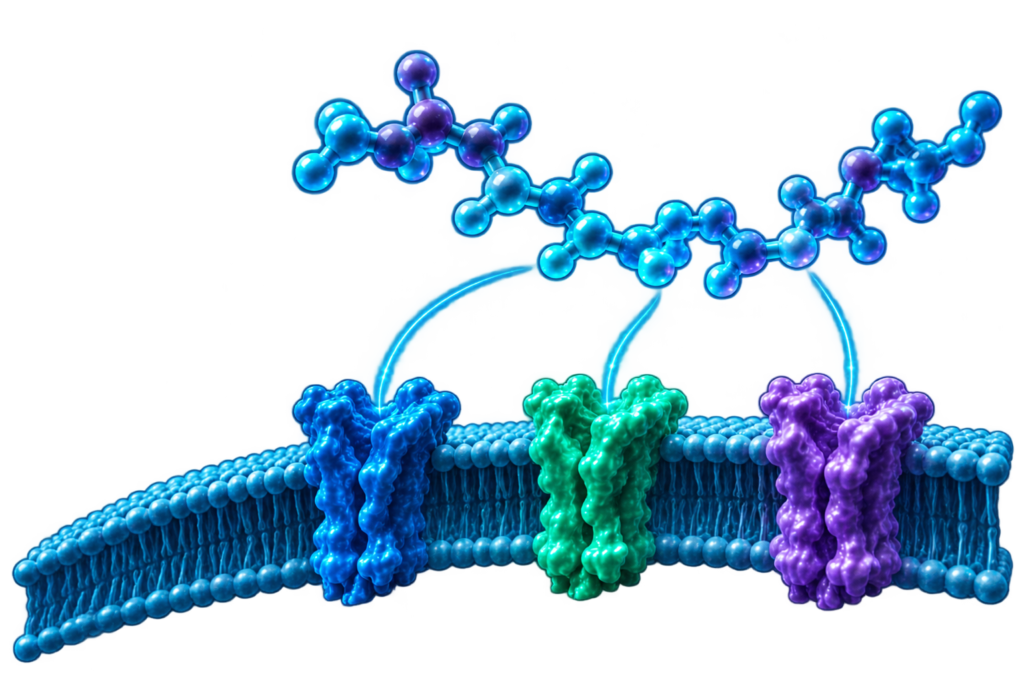
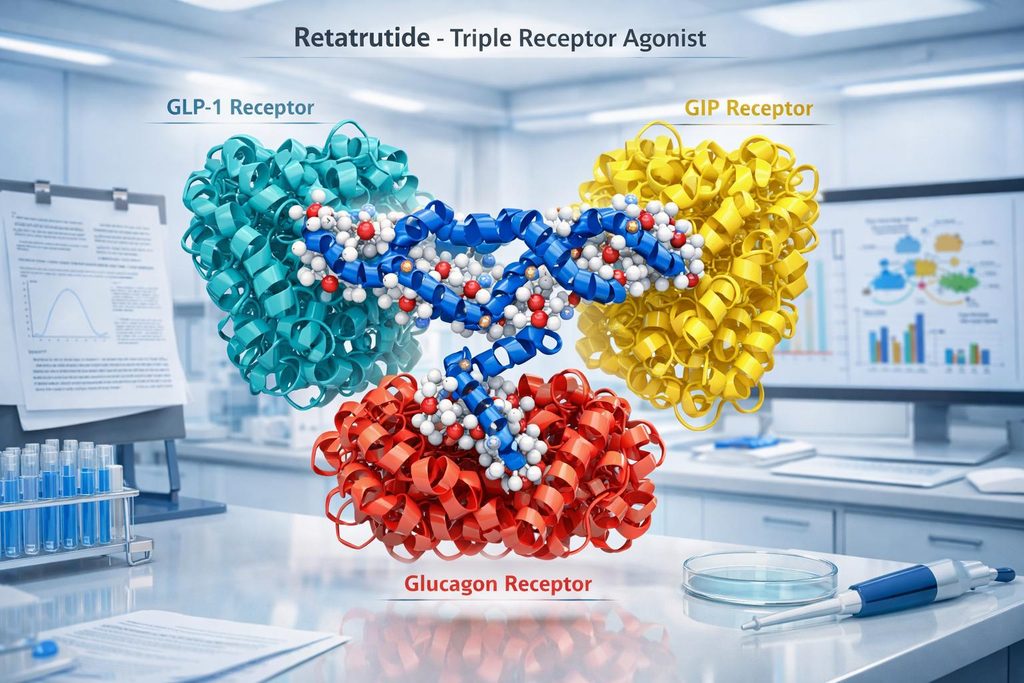
One molecule attracting considerable scientific attention is Retatrutide peptide, also known by its research designation LY3437943. It is an investigational peptide-based molecule designed to activate three distinct hormone receptors: glucose-dependent insulinotropic polypeptide (GIP), glucagon-like peptide-1 (GLP-1) and glucagon receptors.
Unlike compounds that target only one or two of these pathways, Reta is classified as a triple hormone receptor agonist.
At Apex Biotech Labs, we believe that understanding the science behind emerging biotechnology is essential to informed scientific discussion. This article examines Retatrutide’s molecular approach, receptor targets, biological mechanisms and clinical research developments.
1. What Is Retatrutide Peptide?
This is an investigational, single-molecule, triple hormone receptor agonist developed by Eli Lilly and Company.
Its mechanism involves activation of three receptors associated with metabolic regulation:
- GLP-1 receptor
- GIP receptor
- Glucagon receptor
These receptors participate in different physiological signaling pathways, including glucose regulation, energy metabolism and appetite-related processes.
The scientific interest comes from the possibility of engaging these three pathways through one engineered molecule.
Retatrutide peptide is not the same as a naturally occurring hormone. It is a specially designed peptide molecule developed to interact with multiple receptor systems.
Its research designation is LY3437943.
2. Understanding the Three Receptor Targets
To understand this peptide, it is important to examine the biological functions of its three receptor targets.
A. GLP-1 Receptor
Glucagon-like peptide-1 (GLP-1) is an incretin hormone involved in glucose homeostasis.
GLP-1 receptor activation is associated with several physiological responses, including:
- Glucose-dependent stimulation of insulin secretion.
- Suppression of inappropriate glucagon secretion.
- Regulation of gastric emptying.
- Signaling pathways involved in appetite and satiety.
The GLP-1 receptor is therefore an important target in metabolic and endocrinological research.
B. GIP Receptor
Glucose-dependent insulinotropic polypeptide (GIP) is another incretin hormone.
GIP contributes to the regulation of insulin secretion, particularly following nutrient intake.
Its receptor is expressed in several tissues and participates in metabolic signaling.
Research into GIP receptor activation has expanded considerably, particularly in the development of dual and multi-receptor agonist molecules.
C. Glucagon Receptor
Glucagon is a hormone primarily associated with maintaining blood glucose levels during fasting.
Its receptor plays a role in hepatic glucose production and energy metabolism.
Glucagon signaling is also being investigated for its potential involvement in energy expenditure and lipid metabolism.
The inclusion of glucagon receptor activity makes Reta scientifically distinct from compounds targeting only GLP-1 and GIP receptors.
3. What Makes Retatrutide a Triple Agonist?
The term triple agonist describes a molecule capable of activating three different receptor targets.
combines activity at:
- GLP-1 receptors.
- GIP receptors.
- Glucagon receptors.
This approach is particularly interesting because each receptor participates in interconnected but distinct biological pathways.
Rather than focusing on one signaling pathway, the molecule has been engineered to engage multiple metabolic signaling systems.
The scientific challenge is understanding how these different receptor activities interact, how their effects are balanced and how they influence overall physiological responses.
This is one of the central questions being investigated in Retatrutide peptide research.
4. How Does Retatrutide Work at the Molecular Level?
Receptors are specialized proteins that receive and respond to chemical signals.
GLP-1, GIP and glucagon receptors belong to a family of proteins known as G protein-coupled receptors (GPCRs).
When an appropriate agonist binds to a receptor, it can initiate intracellular signaling events.
These events may involve:
- Activation of G proteins.
- Regulation of cyclic adenosine monophosphate (cAMP).
- Changes in intracellular signaling activity.
- Modulation of hormone secretion and metabolic responses.
Retatrutide peptide is designed to interact with all three receptor systems.
Its multi-receptor activity provides an opportunity to investigate how coordinated hormonal signaling may influence metabolic physiology.
However, receptor activation does not automatically translate into the same clinical outcome in every individual. Biological responses depend on multiple factors, including receptor distribution, signaling intensity, tissue characteristics and individual physiology.
5. Retatrutide and Metabolic Research
Metabolism involves a complex network of biochemical reactions through which the body processes nutrients and regulates energy.
Several hormonal systems contribute to these processes.
Retatrutide peptide is being investigated in relation to:
Glucose homeostasis: Researchers are examining how its combined receptor activity influences blood glucose regulation.
Energy metabolism: Glucagon receptor activity has generated interest in the relationship between hormonal signaling and energy utilization.
Appetite-related signaling: GLP-1 and GIP pathways are relevant to research into appetite regulation and satiety.
Body-weight regulation: Clinical studies have investigated changes in body weight in participants receiving the investigational molecule.
These areas of research demonstrate why Retatrutide has become an important subject in contemporary metabolic biotechnology.
6. What Does Clinical Research Say About Retatrutide?
Retatrutide peptide has progressed through clinical development, including Phase 3 investigations.
One important study is TRIUMPH-1, a randomized, double-blind, placebo-controlled Phase 3 clinical trial.
The study evaluated Retatrutide peptide in adults with obesity without diabetes over an 80-week treatment period.
The results, published in the New England Journal of Medicine on September 29, 2026, reported mean body-weight changes of:
- 4 mg group: -17.6%.
- 9 mg group: -23.7%.
- 12 mg group: -25.0%.
- Placebo group: -3.9%.
These results were reported using the trial’s treatment-regimen estimand.
The study also examined outcomes involving knee osteoarthritis pain and obstructive sleep apnea in specific participant subgroups.
Gastrointestinal events were among the most commonly reported adverse events.
These findings are scientifically important, but they must be interpreted within the context of the trial design, participant population, duration and statistical analysis.
Clinical trial findings should not be interpreted as a guarantee of individual results.
7. Retatrutide vs. Semaglutide and Tirzepatide
Retatrutide peptide is frequently discussed alongside other incretin-based molecules.
However, their receptor-targeting profiles differ.
Semaglutide: Primarily activates the GLP-1 receptor.
Tirzepatide: Activates both GIP and GLP-1 receptors.
Retatrutide: Activates GIP, GLP-1 and glucagon receptors.
The main scientific distinction is the number and type of receptor targets involved.
This difference makes Retatrutide particularly interesting to researchers investigating multi-receptor approaches to metabolic regulation.
It is important to avoid assuming that a greater number of receptor targets automatically means better outcomes. Comparative effectiveness and safety must be established through appropriately designed clinical studies.
8. Safety, Clinical Development and Regulatory Status
Retatrutide peptide remains an investigational medicine.
As of November 5, 2026, it has not received FDA approval or approval from another regulatory authority for general human use.
Its clinical development is intended to evaluate both efficacy and safety across different populations and medical conditions.
Researchers must consider several important factors when interpreting investigational compounds:
- Adverse events and tolerability.
- Dose-response relationships.
- Long-term safety.
- Clinical efficacy.
- Potential contraindications and interactions.
- Manufacturing quality and molecular consistency.
Products advertised online as research-grade or laboratory-grade Retatrutide peptide should not be assumed to be approved, verified or suitable for human administration.
Retatrutide peptide should not be treated as an approved medicine or used for self-experimentation outside an authorized clinical research framework.
9. The Future of Triple Agonist Peptide Research
The development of multi-receptor agonists represents an important area of modern peptide biotechnology.
Retatrutide peptide provides an example of how molecular engineering can be used to investigate interactions between several hormonal signaling pathways.
Future research may provide further insight into:
- Receptor selectivity and signaling bias.
- Molecular design and peptide engineering.
- Long-term metabolic outcomes.
- Cardiometabolic risk factors.
- Tissue-specific receptor activity.
- The relationship between hormonal signaling and energy regulation.
As more clinical evidence becomes available, researchers will be better positioned to understand the molecule’s potential applications and limitations.
For biotechnology professionals, students and scientific enthusiasts, Retatrutide offers an interesting case study in the development of next-generation peptide-based molecules.
10. Conclusion
Retatrutide peptide represents an emerging development in peptide biotechnology and metabolic research.
Its ability to activate GLP-1, GIP and glucagon receptors through a single molecule makes it a distinctive example of triple hormone receptor agonism.
Current clinical investigations have generated important findings, while ongoing research continues to evaluate its efficacy, safety and potential applications.
At Apex Biotech Labs, our goal is to make complex scientific developments easier to understand through accurate, evidence-based biotechnology education.
As research progresses, understanding the molecular science behind emerging compounds will remain essential to the advancement of modern biotechnology.
Frequently Asked Questions About Retatrutide
1. What is Retatrutide?
Retatrutide peptide is an investigational peptide-based molecule designed to activate GLP-1, GIP and glucagon receptors. It is classified as a triple hormone receptor agonist.
2. Why is Retatrutide peptide called a triple agonist?
It is called a triple agonist because it activates three different hormone receptors: GLP-1, GIP and glucagon receptors.
3. What is the research designation for Retatrutide?
Its research designation is LY3437943.
4. How is Retatrutide different from Tirzepatide?
Tirzepatide activates GIP and GLP-1 receptors, while Retatrutide activates GIP, GLP-1 and glucagon receptors.
5. Is Retatrutide Peptide FDA-approved?
No. As of November 5, 2026, Retatrutide remains investigational and has not received FDA approval.
6. Who developed Retatrutide?
Retatrutide is being developed by Eli Lilly and Company.
7. What is the importance of Retatrutide in biotechnology?
It demonstrates how peptide engineering can be used to develop molecules that interact with multiple hormonal receptor systems, creating new opportunities for metabolic research.
8. Where can I find reliable information about Retatrutide?
Reliable information can be found in peer-reviewed scientific publications, official clinical trial registries and regulatory communications. Apex Biotech Labs also provides educational content to help readers understand emerging developments in peptide science.
Scientific Disclaimer
This article is provided by Apex Biotech Labs for general biotechnology education and scientific information only. It does not constitute medical advice, a treatment recommendation or an endorsement of any investigational compound. Retatrutide remains an investigational medicine and is not approved for general human use as of November 5, 2026. Clinical findings are subject to ongoing scientific and regulatory evaluation. Readers should consult qualified healthcare professionals regarding medical decisions.
Published by Apex Biotech Labs
Scientific References
- Jastreboff AM, et al. Retatrutide, a Triple Hormone Receptor Agonist, for Treatment of Obesity. New England Journal of Medicine. September 29, 2026. DOI: 10.1056/NEJMoa2604169. https://doi.org/10.1056/NEJMoa2604169
- Eli Lilly and Company. What to Know About Retatrutide. Updated October 2026. https://www.lilly.com/news/stories/what-to-know-about-retatrutide
- Eli Lilly and Company. Retatrutide Phase 3 Clinical Development Updates. https://www.lilly.com/
- ClinicalTrials.gov. Retatrutide Clinical Trial Registry. https://clinicaltrials.gov/search?term=retatrutide
- PubMed. Scientific Literature on Retatrutide. https://pubmed.ncbi.nlm.nih.gov/?term=retatrutide
Apex Biotech Labs | Exploring the Science Behind Biotechnology.