
Peptides vs. Proteins: Understanding the Key Differences
A scientific comparison of amino acid chains, molecular structure, protein folding, and biological functions
Peptides and proteins are two closely related classes of biological molecules that play essential roles in living organisms. Both are composed of amino acid residues connected through peptide bonds, and both participate in numerous biochemical and physiological processes.
Despite sharing the same fundamental chemical building blocks, peptides and proteins are not always identical in their molecular organization, structural complexity, or biological functions.
Understanding the distinction between these molecules is important in biochemistry, molecular biology, pharmaceutical research, and modern biotechnology. It also provides a foundation for understanding how scientists investigate peptide-based compounds and protein-related technologies.
Although the terms are sometimes used interchangeably in general discussions, there are meaningful scientific differences worth examining.
This article explores how peptides and proteins compare, how their structures are organized, what functions they perform, and why the distinction matters in biotechnology research.
1. What Is the Difference Between Peptides and Proteins?
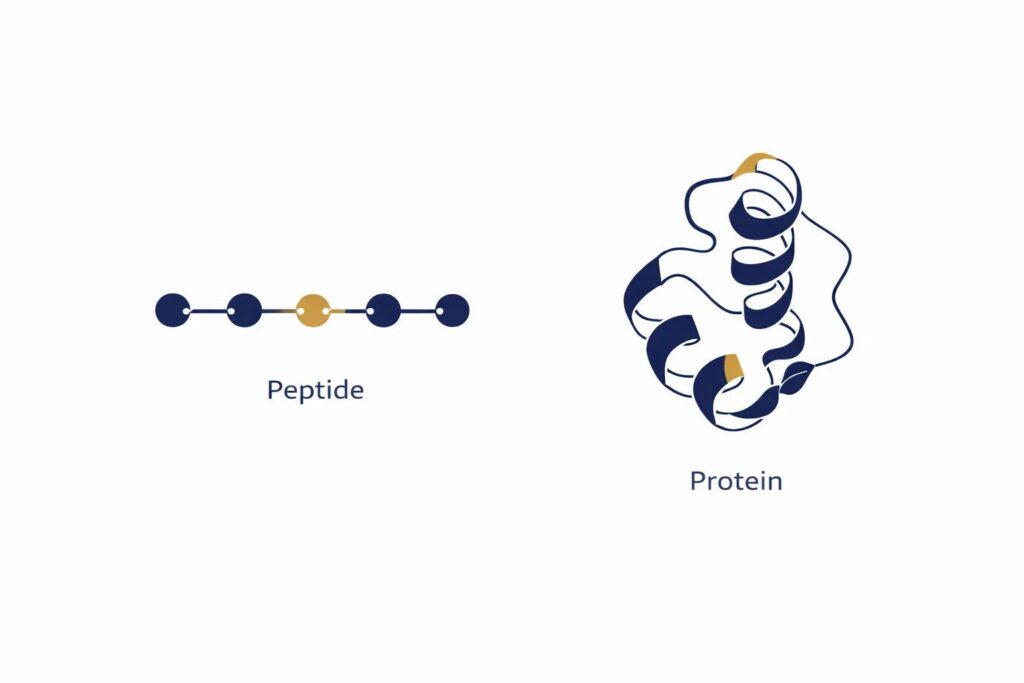
The fundamental difference between peptides and proteins is generally associated with the length of their amino acid chains, their structural organization, and their biological complexity.
Peptides are commonly described as relatively short chains of amino acid residues connected through peptide bonds. Proteins generally consist of one or more longer polypeptide chains organized into specific three-dimensional structures.
However, there is no universally accepted amino acid number that separates every peptide from every protein. Different scientific references and classification systems use different conventions.
The International Union of Pure and Applied Chemistry (IUPAC) describes peptides according to their chemical structure and recognizes distinctions involving oligopeptides and polypeptides. In common biological and educational usage, chains of approximately 2–50 amino acid residues are often described as peptides, while longer chains are frequently discussed as polypeptides or proteins.
The important point is that chain length is useful for classification, but it does not explain every structural or functional distinction.
A protein is generally understood as a biologically organized molecular structure consisting of one or more polypeptide chains, often with a characteristic three-dimensional conformation and biological role.
2. Understanding Their Shared Molecular Composition
Before comparing peptides and proteins, it is important to understand what they have in common.
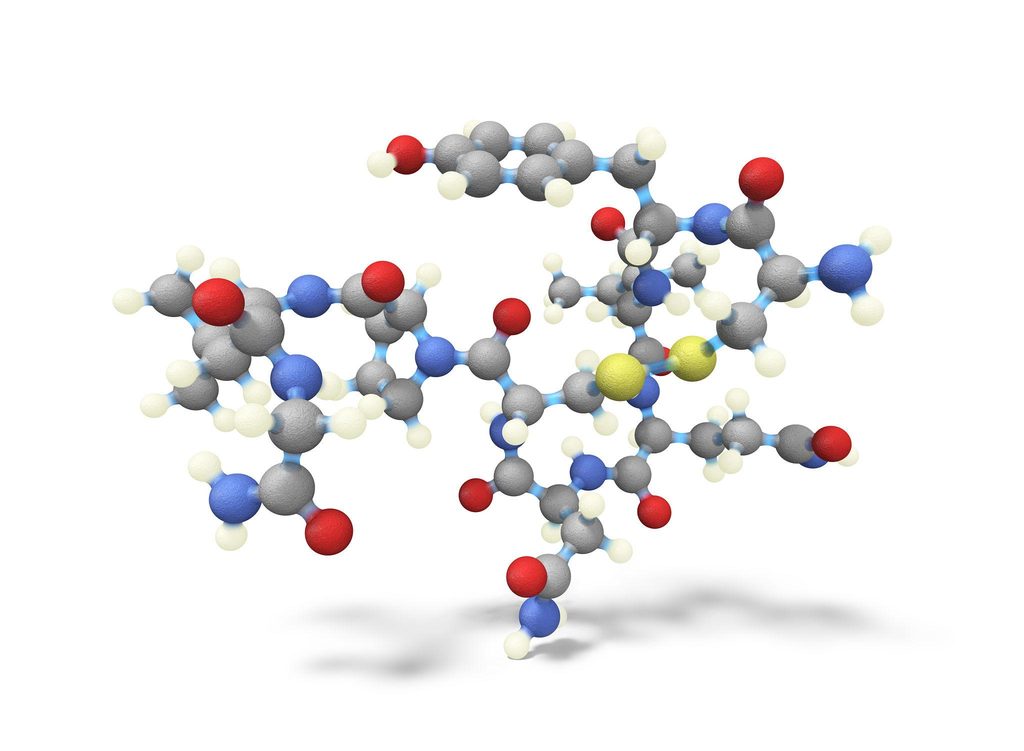
Both molecules are constructed from amino acids, which are organic compounds containing amino and carboxyl functional groups.
Most proteins are built from 20 commonly recognized standard amino acids. Each amino acid has a distinctive side chain, commonly represented as an R group, that contributes to its chemical properties.
These amino acids become connected through peptide bonds.
A peptide bond is a covalent amide linkage formed between the carboxyl group of one amino acid and the amino group of another.
As additional amino acids become connected, they form a continuous chain.
The resulting amino acid sequence is known as the primary structure of the molecule.
Although peptides and proteins share this basic chemical arrangement, differences in chain length, amino acid sequence, molecular interactions, and folding can result in substantially different molecular properties.
3. Peptides: Structure and Characteristics
Peptides are generally smaller amino acid chains that can perform a wide range of biological functions.
Their characteristics depend on the sequence of amino acid residues, the chemical properties of their side chains, and their interactions with other molecules.
Common Characteristics of Peptides
Relatively short amino acid sequences: Peptides are commonly smaller than typical proteins, although classification boundaries vary across scientific disciplines.
Peptide bond formation: Their amino acid residues are connected through covalent peptide bonds.
Biological activity: Certain peptides function as signaling molecules, hormones, neurotransmitters, or components of immune defense.
Molecular specificity: The amino acid sequence influences how a peptide interacts with biological targets.
Structural flexibility: Depending on their sequence and environment, peptides may adopt flexible conformations or more defined three-dimensional structures.
Examples of Peptides
Several naturally occurring biological molecules are classified as peptides.
- Oxytocin: A nine-amino-acid peptide hormone involved in processes such as uterine contraction and milk ejection.
- Substance P: A neuropeptide involved in pain transmission and other nervous system processes.
- Glutathione: A tripeptide composed of glutamate, cysteine, and glycine that contributes to cellular antioxidant defense.
These examples demonstrate that relatively small amino acid chains can have important biological functions.
4. Proteins: Structure and Characteristics
Proteins are complex biological molecules that perform a wide variety of functions in living organisms.
They generally consist of one or more polypeptide chains that adopt specific molecular arrangements. Their structures are influenced by amino acid sequences, chemical interactions, environmental conditions, and, in many cases, interactions with other molecules.
Proteins are essential for maintaining cellular structure, facilitating biochemical reactions, transporting substances, supporting immune activity, and regulating physiological processes.
Common Characteristics of Proteins
Polypeptide organization: Proteins consist of one or more amino acid chains.
Three-dimensional folding: Many proteins develop specific three-dimensional conformations that are closely associated with their biological activities.
Structural complexity: Proteins may contain several levels of molecular organization, including primary, secondary, tertiary, and quaternary structures.
Functional diversity: Proteins can act as enzymes, structural components, transport molecules, receptors, antibodies, and signaling molecules.
Molecular interactions: Many proteins interact with other proteins, nucleic acids, lipids, carbohydrates, or smaller molecules.
Examples of Proteins
Examples of proteins include:
- Hemoglobin: A protein found in red blood cells that transports oxygen.
- Albumin: A major plasma protein involved in maintaining oncotic pressure and transporting various substances.
- Collagen: A structural protein that contributes to the organization and strength of connective tissues.
- Amylase: An enzyme that participates in the breakdown of starch.
These examples illustrate the broad range of biological activities performed by proteins.
5. Peptides vs. Proteins: A Detailed Comparison
Although peptides and proteins share the same basic chemical composition, several characteristics help distinguish them.
| Comparison | Peptides | Proteins |
|---|---|---|
| Basic composition | Amino acid residues | Amino acid residues |
| Typical chain length | Relatively short | Generally longer |
| Molecular organization | May be flexible or folded | Often exhibits defined structural organization |
| Structural levels | Primary structure and possible additional folding | Commonly described using primary, secondary, tertiary and sometimes quaternary structures |
| Biological functions | Signaling, regulation and other activities | Structural, catalytic, transport, immune and regulatory activities |
| Examples | Oxytocin, substance P | Hemoglobin, albumin, collagen |
| Molecular complexity | Often relatively simple | Frequently more complex |
| Number of chains | Commonly one short chain | One or multiple polypeptide chains |
| It is important to remember that these are general comparisons rather than absolute rules. Some peptides adopt complex structures, and not all proteins consist of multiple chains or exhibit every structural level. |
6. Understanding the Four Levels of Protein Structure
One of the most important differences in studying proteins is the way their molecular structures are organized.
Protein structure is commonly described through four hierarchical levels.
Primary Structure
Primary structure refers to the linear sequence of amino acid residues within a polypeptide chain.
The sequence determines the chemical identity and arrangement of the amino acid residues.
Even a small change in the sequence can influence molecular interactions, folding, stability, and biological activity.
Both peptides and proteins possess primary structures because both contain ordered amino acid sequences.
Secondary Structure
Secondary structure describes local patterns of folding within a polypeptide backbone.
Two widely recognized examples are:
- Alpha helices.
- Beta sheets.
These structures are stabilized primarily by hydrogen bonding between atoms of the peptide backbone.
Secondary structural elements contribute to the overall organization of many proteins.
Tertiary Structure
Tertiary structure refers to the overall three-dimensional arrangement of a single polypeptide chain.
It is influenced by several molecular interactions, including hydrogen bonding, ionic interactions, hydrophobic interactions, and disulfide bonds.
The resulting molecular conformation can influence how a protein interacts with biological targets.
Some peptides also adopt stable or biologically important three-dimensional conformations, so folding is not exclusive to proteins.
Quaternary Structure
Quaternary structure describes the organization of two or more polypeptide chains into a functional molecular complex.
Hemoglobin is a well-known example because it contains four polypeptide subunits.
Not all proteins possess quaternary structure. Some functional proteins consist of a single polypeptide chain.
7. How Do Peptides and Proteins Differ in Biological Function?
Peptides and proteins participate in numerous biological processes, but their specific functions depend on their molecular properties and biological context.
Cellular Signaling
Some peptides act as signaling molecules that bind to specific receptors and initiate cellular responses.
For example, oxytocin participates in physiological signaling through interactions with its receptor.
Proteins also participate in cellular communication. Receptors, signaling enzymes, and intracellular regulatory proteins contribute to complex communication networks.
Enzymatic Activity
Many proteins function as enzymes that accelerate biochemical reactions.
Examples include amylase, lipase, and DNA polymerases.
Although peptides can influence enzymatic activity and may possess catalytic properties in certain systems, most familiar biological enzymes are proteins or protein-based complexes.
Structural Support
Proteins such as collagen and keratin provide structural support to tissues and biological structures.
Peptides generally do not perform the same large-scale structural roles, although they can contribute to the assembly and organization of biological materials.
Immune Function
Proteins such as antibodies recognize and bind specific molecular targets, supporting adaptive immune responses.
Certain peptides, including antimicrobial peptides, contribute to innate immune defense.
Metabolic Regulation
Both peptides and proteins contribute to metabolic regulation.
Insulin is an especially useful example because it is a peptide hormone consisting of two polypeptide chains linked by disulfide bonds. It demonstrates that peptide and protein terminology can overlap depending on the context and classification system.
8. Why Is the Difference Important in Biotechnology?
Understanding the distinction between peptides and proteins is important for several areas of modern biotechnology.
Peptide-Based Drug Development
Researchers investigate peptides as potential therapeutic candidates because their amino acid sequences can interact with specific biological targets.
Their molecular properties make them useful subjects in pharmaceutical research, drug discovery, and molecular engineering.
However, a peptide being investigated in a laboratory should not automatically be considered an approved or clinically established medicine.
Recombinant Protein Production
Biotechnology companies use recombinant DNA technologies and engineered biological systems to produce proteins for research, diagnostics, and pharmaceutical applications.
Examples include recombinant insulin and various therapeutic proteins.
These production processes require careful attention to protein expression, folding, purification, and quality characterization.
Molecular Diagnostics
Peptides and proteins can both serve as components of diagnostic technologies.
Scientists investigate their interactions with antibodies, receptors, and other biological molecules to develop analytical systems for detecting specific targets.
Structural Biology
Researchers use techniques such as X-ray crystallography, nuclear magnetic resonance spectroscopy, and cryo-electron microscopy to investigate molecular structures.
These techniques contribute to understanding how amino acid sequences relate to molecular organization and biological activity.
Pharmaceutical Characterization
Peptides and proteins require appropriate analytical approaches to establish their identity and characterize their molecular properties.
Depending on the molecule, analytical techniques may include high-performance liquid chromatography, mass spectrometry, electrophoresis, and other specialized methods.
9. Can a Peptide Become a Protein?
The relationship between peptides and proteins is based on the continuous organization of amino acid residues into increasingly complex molecular structures.
As additional amino acids are connected, a peptide chain can become longer and may be described as a polypeptide.
In biological systems, ribosomes synthesize polypeptide chains according to genetic information encoded in messenger RNA.
These chains may subsequently fold, undergo chemical modifications, interact with other molecular components, or combine with additional polypeptide chains.
When a polypeptide forms part of a functional protein structure, it is considered a protein component.
However, it is misleading to suggest that every short peptide automatically becomes a protein simply by increasing its length. Molecular sequence, structural organization, biological context, and function also matter.
10. How Do Scientists Analyze Peptides and Proteins?
Laboratory analysis is essential for understanding the characteristics of peptides and proteins.
Different analytical methods are selected according to the size, composition, structure, and intended research application of the molecule.
High-Performance Liquid Chromatography (HPLC): HPLC separates components within a sample and can be used to evaluate chromatographic purity and sample composition.
Mass Spectrometry (MS): Mass spectrometry provides information about the mass-to-charge ratios of ions and supports molecular mass determination and molecular characterization.
Sodium Dodecyl Sulfate Polyacrylamide Gel Electrophoresis (SDS-PAGE): This method is commonly used to separate proteins according to their apparent molecular mass under denaturing conditions.
Nuclear Magnetic Resonance (NMR) Spectroscopy: NMR can provide information about molecular structure, dynamics, and interactions.
X-ray Crystallography: This technique can be used to determine the atomic structure of suitable crystallized proteins and other biological molecules.
The choice of analytical method depends on the research question. A single technique rarely provides a complete description of every molecular characteristic.
11. The Future of Peptide and Protein Research
Research into peptides and proteins continues to develop alongside advances in molecular biology, computational science, biotechnology, and pharmaceutical engineering.
Some important areas of investigation include:
- Protein engineering: Modifying protein sequences and structures to investigate or improve specific properties.
- Computational molecular design: Using computational approaches to predict molecular structures and investigate interactions.
- Peptide therapeutics: Developing and evaluating peptide-based candidates for potential medical applications.
- Recombinant biotechnology: Improving biological production systems for research and pharmaceutical applications.
- Structural biology: Using advanced imaging and analytical technologies to investigate molecular organization.
- Artificial intelligence: Exploring machine learning approaches for protein structure prediction, peptide design, and molecular discovery.
These developments continue to expand scientific understanding of biological molecules and their potential applications.
Frequently Asked Questions
Are peptides and proteins made of the same building blocks?
Yes. Both are composed of amino acid residues connected through peptide bonds.
Which is larger, a peptide or a protein?
Proteins are generally larger and contain longer polypeptide chains, although the classification boundary is not universally fixed.
Are all proteins polypeptides?
Proteins consist of one or more polypeptide chains, sometimes combined with additional non-protein components.
Do peptides have three-dimensional structures?
Yes. Some peptides adopt stable three-dimensional conformations, although their structural organization varies considerably.
Is insulin a peptide or a protein?
Insulin is commonly described as a peptide hormone and also as a small protein. It contains two polypeptide chains connected by disulfide bonds, illustrating the overlap between these classifications.
What is a polypeptide?
A polypeptide is a chain of amino acid residues connected through peptide bonds. Polypeptides form the structural foundation of proteins.
What are the four levels of protein structure?
They are primary, secondary, tertiary, and quaternary structures.
Can peptides perform biological functions?
Yes. Peptides participate in signaling, hormonal regulation, immune defense, and numerous other biological processes.
How are peptides different from amino acids?
An amino acid is an individual molecular building block, whereas a peptide contains multiple amino acid residues connected by peptide bonds.
Why are peptides and proteins important in biotechnology?
They are important in drug discovery, molecular diagnostics, recombinant production, structural biology, analytical research, and the investigation of biological processes.
Conclusion
Scientific References
- International Union of Pure and Applied Chemistry (IUPAC). (2025). Peptides. Compendium of Chemical Terminology (Gold Book). https://goldbook.iupac.org/terms/view/P04479
- International Union of Pure and Applied Chemistry (IUPAC). Polypeptides. Compendium of Chemical Terminology (Gold Book). https://goldbook.iupac.org/terms/view/P04749
- Alberts, B., et al. Molecular Biology of the Cell: The Shape and Structure of Proteins. NCBI Bookshelf. https://www.ncbi.nlm.nih.gov/books/NBK26830/
- Sanvictores, T., & Farci, F. Biochemistry, Primary Protein Structure. StatPearls. NCBI Bookshelf. https://www.ncbi.nlm.nih.gov/books/NBK564343/
- Rehman, I., Farooq, M., & Botelho, S. Biochemistry, Secondary Protein Structure. StatPearls. NCBI Bookshelf. https://www.ncbi.nlm.nih.gov/books/NBK470235/
- Kaprive, J. F., & Merheb, E. Protein Structure and Function. StatPearls. NCBI Bookshelf. https://www.ncbi.nlm.nih.gov/books/NBK562260/
- National Human Genome Research Institute. Peptide. Genome.gov. https://www.genome.gov/genetics-glossary/Peptide
Educational disclaimer: This article is intended for scientific and educational purposes only. It does not constitute medical advice, clinical guidance, or a recommendation to use any peptide or protein product.